
Click here for Part I: The Project
And here for Part V: 2 to 10
OK, you did it! I did it! Here we are at number one! Welcome to my favorite album of all time. I’m certain you’ve read every word I wrote about all 99 albums that came before this. You’ve gnashed your teeth and rent your garments at how Lydia Loveless came before Black Sabbath, how Beastie Boys came before Public Enemy, and how a bunch of cultural appropriators like Led Zeppelin came before everyone else. Except this.
Here we are. This has been a journey longer than I care to admit. I was on a pretty good run posting on policehorse.blog before I undertook this project. I posted probably 15-20 items – of varying degrees of quality or interest – between the time I started this site in January of 2017, and my last post in mid 2020. The truth is that this project was supposed to be called Fifty at Fifty. My fifty favorite records of all time, reflected upon around my fiftieth birthday. Well, I turned 53 on my last birthday (54 is later this month), and I’ve been working on this for about four years, on and off. For some reason I felt I *needed* to finish this before I posted shorter pieces about other things. When Justin Townes Earle died in 2020 I did write a short piece about it, but otherwise this has been my project. True, I would go months without writing, but I would always return to try to knock out another album or two or three every so often. So here we go.
1. David Bowie – Hunky Dory
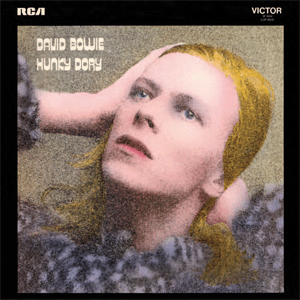
I don’t remember when I first became aware of David Bowie. Being only two years old when his Hunky Dory album was released in 1971, I may have become aware of him in general in the early 1980’s. Songs like “Changes” from this album, or “Space Oddity” from an earlier one, could have been in my consciousness. I may have become aware of Hunky Dory around the time that Let’s Dance propelled Bowie back up to the top of the pop charts and made him an MTV staple. What I remember most about Hunky Dory is that the oft-mentioned Tony, my best friend between the ages of about 11 and 16, had an older sister who owned this record. Tony would frequently appropriate his sister’s albums and we’d listen to them in his room, mere inches of drywall and shoddy insulation away from their rightful home.
Hunky Dory was always an album that we listened to in its entirety. Tony might disagree, and in fact, I have no idea if he feels as strongly about this record as I do. It starts off with what some might consider the biggest hit of Bowie’s career: “Changes.” You know the one: “Ch-ch-ch-ch-changes (turn, and face the strange…)” It’s a song that despite it’s prolific radio airplay and cementation in the rock and roll cultural lexicon, along side stalwarts like “Stairway to Heaven”, “Smoke on the Water,” and “Don’t Fear the Reaper,” it never feels old to me. I never get sick of it. I know it like the back of my hand, and although I am not a skilled singer, I can hit every note, every small inflection, every warble of Bowie’s voice on the song. I realized that my turntable was amiss when I purchased a vinyl reprint of Hunky Dory and realized “Oh, that’s off.” I had owned the record player for months before this song made me realize that the timing was slightly askew. I summoned up a version on Spotify, timed it to the album track while adjusting the speed setting, and my JVC has been harmonious ever since.
That’s how well I know the song. That’s how much I love the song. It’s almost quaint now, lyrically. The long dead Bowie in his youth shaking his fist at the establishment, the autocrats who left his generation with a steaming pile of shit. But it’s an anthem that I hope still rings true with young people of every generation:
And these children that you spit on
As they try to change their worlds
Are immune to your consultations
They’re quite aware what they’re going through
As I finish this project, I want to remind you that I’m not here to try tell you why this music is important or what it means. Other people have already done that. I’m here to tell you why this music is important to me, why I love it. And I’m the only one who can tell you that.
Bowie has fascinated me from the day Tony and I played the purloined copy of his sister’s Hunky Dory until this very day, forty years later. Someone is to this day releasing live albums, outtakes, and remixes of his material. Of course Bowie was active musically from the early 1960’s until just before his death from cancer at the age of 69 in 2016. I’m not an expert on all his music, I don’t love it all, and I haven’t really even heard it all. I’ve liked some of his later stuff, like the nearly-posthumously-released Blackstar from 2016, or 2013’s The Next Day. The first of his albums that I loved, in his own chronology, was Space Oddity from 1969, and after uncountable twists and turns culturally, musically, and stylistically, the last one I really enjoyed and played a lot was 1983’s Let’s Dance. So that’s a heyday of 14 years, which is aeons in the music business. The fact that he was successful commercially and critically for close to fifty years is remarkable. You wouldn’t have thought the artist who made Let’s Dance was the same one who recorded Space Oddity, but Bowie was notorious for shifting genres, trying on styles, and being ahead of his time, a throwback to earlier times, and exactly of his times, simultaneously.
The style that I loved the most was the period that began with Hunky Dory in 1971 and ended with Diamond Dogs a scant three years later in 1974. I have loved albums before this (Space Oddity, The Man Who Sold the World) and I have loved albums after this (Young Americans, Station to Station, Scary Monsters, even Blackstar.) But the four-album run of Hunky Dory, The Rise and Fall of Ziggy Stardust and the Spiders from Mars, Aladdin Sane, and Diamond Dogs is a perfect quadrafecta of records, rivaled only by, well, some of the others you’ve read about here (Zeppelin, Beatles, Stones, Floyd…)
Bowie’s birthday was January 8, and he died on January 10, 2016. So I and other local fans refer to the second week of January as Bowie Week. I’ve been to countless Bowie Week events these last few years. Hell, I could – and maybe I will when I’m done with this endless project – do a whole post just about Bowie Week 2019, or more specifically, Bowie Night at B-Side that year. An eventful night in my life, to be sure, with an interminable cast of characters. But more on that another time.
Honestly, it’s *almost* a coin flip for me, Hunky Dory vs. Ziggy Stardust. I think most people would say Ziggy Stardust given the choice. I know my friend Kevin (whom I met at Bowie Night 2019) would. The obvious hits on Ziggy make the case: the title track, “Suffragette City,” “Moonage Daydream,” “Starman.” And there is no filler on Ziggy either: “Five Years,” “Soul Love,” “Star,” “Rock N Roll Suicide…” it’s a perfect record. Is Hunky Dory more perfect? No. But for me, it’s where the coin lands.
“Changes” turns to “Oh, You Pretty Things,” which pushes Bowie’s voice into falsetto range as he implores “Don’t you know you’re driving your mamas and papas insane, let me make it plain…” It’s a banger for sure, on an album full of bangers. This gives way to “Eight Line Poem,” a beautiful, piano-heavy ode to a mobile, a cactus, a dog, a shadow on the wall, the things that make up the artist’s day, and your and my day as well. It’s a gorgeous melody. Hunky Dory is a sublime record, without many “hits,” but with all the beauty and glory that make up the works of an artist in his or her prime. It’s a masterpiece. The masterpiece of my lifetime.
Open shops down the west side
Will all the cacti find a home?
But the key to the city
Is in the sun that pins the branches to the sky
“Eight Line Poem” flows into “Life On Mars,” which I wouldn’t think of as a huge Bowie “hit,” but was at one time his most downloaded song on Spotify. The thing about Hunky Dory is it’s an eleven track poem from start to finish, without being a “concept” album. It’s the artist as a rebel, the artist as an alien, the artist as a husband and a father, the artist as a different artist. It encapsulates everything David Bowie was, from beginning to end, in a single record, I think more than any other.
It’s a God-awful small affair
To the girl with the mousy hair
But her mummy is yelling no
And her daddy has told her to go
But her friend is nowhere to be seen
Now she walks through her sunken dream
To the seat with the clearest view
And she’s hooked to the silver screen
And on we go, in “Life On Mars,” describing the action on the screen as it mimics the action in our real world. What is art? Does art describe us? And if so, why do we care, when we have Us, ourselves? Is art boring? Is there life on Mars? Who cares? Because there is life here.
Next up, “Kooks” is a gorgeous ode to Bowie’s young child, imploring him about the important things in life.
Will you stay in our lovers’ story?
If you stay you won’t be sorry
‘Cause we believe in you
Soon you’ll grow, so take a chance
With a couple of kooks hung up on romancing
It’s a fun song that can’t help but get you tapping your feet and singing along. But after that comes “Quicksand,” a lament that questions everything about the world, love, life, death, and existence itself.
I’m not a prophet or a stone age man
Just a mortal with potential of a superman
I’m living on
I’m tethered to the logic of Homo Sapien
Can’t take my eyes from the great salvation
Of bullshit faith
Bowie never minced words, but he sliced and diced them a bit to show us – as Picasso did in paint, as Eliot did in poetry – the twisted world reflected back on us, and dared us to look into the mirror. Quicksand would never be called a hit, but I have wept more than once as it played. If no one else was around.
After the “Quicksand” dirge, Hunky Dory continues its effortless flitting from style to style, sound to sound, genre to genre. Next is the jazzy little romp “Fill Your Heart,” a lovely, optimistic, command to fill your heart with love. Fear is in your head. You can know it all, if you choose. Lovers never lose. Love will clean your mind and make you free. It’s the most un-Bowie of Bowie songs, but here on Hunky Dory it is absolutely perfectly Bowie.
But without a break in the tracks, it gets deeper, darker and begins the twin songs “Andy Warhol,” and “Song for Bob Dylan,” homages to two of the most influential artists of the 20th century. “Andy Warhol” begins ominously, with computerized notes that are more circuitry than music. An earnest Bowie, as Warhol, explains how to pronounce his name: “It’s ‘hol’, as in ‘holes,’ ‘Andy War-HOL,” or maybe this is just studio banter and he’s discussing with his bandmates and producers how the artist’s name is pronounced. The song doesn’t properly get started until almost 50 seconds in, with Bowie exclaiming:
Like to take a cement fix
Be a standing cinema
Dress my friends up just for show
See them as they really are…
A few other choice lines are below. He continues,
I’d like to be a gallery
Put you all inside my show…
Finally,
You think about paint
And you think about glue
What a jolly boring thing to do
The internet must know, but I don’t know exactly what Bowie is trying to say here. When Hunky Dory was released in 1971, Warhol was at the height of his influence: The Factory, The Velvet Underground, and the Pop Art phenomenon of the 1960s’ that he spearheaded were at their very peak. Some could argue that Bowie himself was a kind of Warholesque figure in rock music, “dressing his friends (and himself) up for show,” always challenging artistic expression’s reigning paradigms. I think Bowie sees himself in Warhol and is uncomfortable with what he sees and wants to tease him a bit. Maybe I’m reading into something that’s not there. Who cares, it’s MY song! It’s a dark tune with a jaunty chorus, which I think describes both Warhol and Bowie pretty well.
From one contemporary to another, Bowie then takes on Bob Dylan with the eponymous “Song for Bob Dylan,” which is performed in the jangly, rocky, folksy style of Dylan himself. I think Bowie is kinder to Dylan than Warhol here, as he pays homage to the American legend a few years after Highway 61 Revisited and Blonde on Blonde, but years before Blood on the Tracks. In other words, Bowie muses right in the middle of Dylan’s massive popularity and influence on global culture and counterculture.
His words of truthful vengeance
They could pin us to the floor
Brought a few more people on
And put the fear in a whole lot more
It’s interesting that Bowie (or someone) chose to put these testaments to contemporary artists back to back on the record. I don’t know if there was a connection between Warhol and Dylan, or what their connection – if any – to Bowie was here at the beginning of the the most artistically prolific phase of his career, but if nothing else, it makes you think of these three men together: the influence they had on art, poetry, music, culture, counterculture, sexuality, and rock and roll. Andy Warhol, Bob Dylan, and David Bowie. Decent company for a dinner party, right?
Hunky Dory is such an eclectic collection of songs and stories, “Song for Bob Dylan” gives way to an absolute banger in “Queen Bitch.”
And she’s known in the darkest club
For pushing ahead of the dames
If she says she can do it, then she can do it
She don’t make false claims
Mick Ronson is absolutely slaying on lead guitar here: Crunchy riffs that more or less defined the “glam rock” sound, to be memorialized by so many bands who came later. Bowie himself is in full rock star mode describing a queen of the night, whose gender is not necessarily revealed, in a perfect description of an early-70’s underground frenetic energy and vibe that half makes you wish you were there, and half makes you wonder if you’d be able to keep up.
Finally, the last track of the record: “The Bewley Brothers.” God only knows what’s it’s really about. It sounds like nonsense, but I have read that in later years Bowie admitted that it may have been loosely referring to himself and his schizophrenic half-brother. It’s impossible to explicate, so I wouldn’t want to try too hard. As a coda to this album, my favorite album of all time, it’s perfect. It has a beautiful melody, vocals, and guitar work just before it ends incredibly weirdly. I think of The Pixies when I hear this song because I suspect it’s about nothing at all, but the abstract strings of words sound absolutely gorgeous:
Sighing, the swirl through the streets
Like the crust of the sun
The Bewlay Brothers…
I was stone and he was wax
So he could scream and still relax
Unbelievable
And we frightened the small children away…
Now my brother lays upon the rocks
He could be dead, he could be not, he could be you
He is chameleon, comedian
Corinthian, and caricature
I mean, come on! This is poetry. What does it mean? I can’t tell you. I don’t even know if Bowie could have told you. But it’s a perfect ending to a perfect album.
Again, Ziggy Stardust may have had more hits, while Diamond Dogs and Aladdin Sane are both very worthy bests on anyone’s list of Bowie albums or any albums. But for me, it’s Hunky Dory. It’s a record you can put on day or night, weekend or weekday, in any company, and you can be assured that you will love it, and many other people will love it too, and some will think it’s really weird. And it’s my favorite. Of all time. I’m not saying the music was the best, or the guitar playing, or the lyrics, or even Bowie himself. But in a universe of incredible records by artists young and old, dead and alive, hip hop and jazz and classic rock and heavy metal, Hunky Dory is it for me. I claim it. It’s mine. But you can have it too, and do with it what you want. This is the beauty of music, and hell, all art. It doesn’t have to be cool. It doesn’t have to make sense. People don’t have to agree, and it doesn’t need to belong to you. But when it does, it does. And you seldom ever let go.
So that’s it. We’re done. Reflecting back on the years I took to put this list together has been eye-opening. Well, let’s be fair: the list was easy. Trying to write something meaningful about one hundred different records was the hard part. And honestly, that part wasn’t too hard either. The real hard part was sitting down to do the writing. Once I start, I’m on a roll, but then I might not start again for four months. This is why I know I’m not a writer. Writers write. Painters paint. Musicians play music. Athletes compete. I’m a dabbler, and now I’ve dabbled enough to get thoughts about one hundred records down on – well, not paper, but you know.
If you want to know what’s important to you, look at where you put your time. Is it gardening? Playing video games? Watching TV? Working out? Hanging out with your friends or family? Reading? Working? For me, I put time into all these things. Someone interesting – don’t ask me to remember who – recently said to write down the 25 things that are most important to you, in order. Then cross off the last 20 things on that list. The five things that remain are the things that you will truly pay attention to. Everything else will be “best effort.” So nurture those five. Live with those. Find love in those. Here are mine:
- Financial security
- Physical health
- Relationships with family
- Relationships with a romantic partner and with friends
- Music
Everything is about me and my relationships (the first two lead directly to the second two, for me). The first thing outside of that that comes up is music. If I expand my list you’ll see things like reading, gardening, traveling, watching great films and TV shows, exercise, my career, my cat, cooking, hiking, camping, etc. But ultimately, as I sit here firmly in the back half of my life, besides my personal well-being and my relationships with the important people I surround myself with, it’s always been music. David Bowie, Led Zeppelin, Pixies, Beastie Boys, Liz Phair and all the others I’ve discussed in these posts. These people, I don’t know them. I’ve never met them (well, I’ve met a few of them…mostly lower on the list), and I don’t know who they are or were as human beings. But I know what their music has meant to me. It’s meant the world.
 police horse home...
Leave a comment