
Click here for Part I: The Project
And here for Part IV: 11 – 25
10. Neil Young – Harvest
Well, here we are. The top ten. I assume you’ve read every single word of all ninety albums discussed before this. Top ten, whew… finally! You’ve learned my tastes by this point, and you know which artists you haven’t seen yet. You could probably guess half or more of these, but I’m hoping there will still be some surprises. And it’s time for me to stop calling albums perfect now, although I won’t. It’s a given that from here on out, every record discussed is the pinnacle. The top of the mountain. Sublime, superlative, scintillating, surreal. Flawless like the ten most rare diamonds in the world. That’s what these top ten records are.
Neil Young’s Harvest from 1972 starts off the top ten. Young, to me, rivals only Leonard Cohen as an artist who has made truly relevant music in every decade since the 1960’s. The so-called Godfather of Grunge has a catalog that it would take you months to digest, and you’d find so much incredible stuff in it – from Buffalo Springfield to Crosby Stills Nash & Young, to Crazy Horse, and all the amazing musicians who have accompanied Young along the way – that it might be hard to zero in on a single album. But not for me. It is only and has only ever been Harvest.
I came to Neil Young a little later than many of the bands on this list. My fandom honestly began with my purchase of the Harvest CD sometime in the late 80’s or so. I don’t remember where or why I bought it, but it’s been on repeat for well over 30 years. But first, a little Neil Young story.
Sometime in the mid-90’s, I had a friend named Scott – the husband of a cousin of mine – who surprised me for my birthday with Pearl Jam tickets at Golden Gate Park in San Francisco. I didn’t have the heart to tell him that I wasn’t a Pearl Jam fan. Don’t get me wrong, they are a fine band full of talented musicians, who have made relevant music and fought for great causes (PJ vs. Ticketmaster was memorable!), but like Radiohead and Dave Matthews, my tastes just lie in different realms, no offense to them or their fans.
But my friend didn’t know this. He just knew I had long, dyed-black hair and a nose ring and I was into rock and roll and wore ripped up jeans with thermal underpants poking through the holes. A betting man would have put me as a Pearl Jam fan. So we roll out to SF, to Golden Gate Park, watch the opening act, and start weaseling our way up front when Pearl Jam takes the stage. They do one, maybe two numbers, and all of the sudden Eddie Vedder leans into the microphone and says something like, “Look folks, I’m so sorry, I have the flu. I gave it a shot, but I just can’t do it. We’ll refund your money for the tickets, I have to go backstage and die now. But we have a special guest who will play some music for you with the band if you want to stick around.”
And Neil Young came onstage.
And he played for two fucking hours – his own songs – with Pearl Jam as the motherfucking backing band!!! Are you even kidding me? Pearl Jam knew all of Neil’s songs? (Of course they did.) Neil just happened to be there? (Maybe for a guest duet?) Whatever. It can’t be explained. It was kismet, good luck, and serendipity for yours truly all wrapped up into one. What started as a day where I bravely tried to be a good sport to my friend and watch a band I felt very “meh” about after a two hour drive, turned into me jumping up and down, grinning from ear to ear, screaming, and singing every word to every song. Even though I had only been into Neil Young for a few years at that point, I had become a fast fan. The icing on the cake is that my friend got his money back for the tickets! Again, I do not mean to disrespect Pearl Jam. They seem like quality individuals, and they are obviously killer musicians who have touched millions of hearts. Mine just wasn’t one of them. Well, until they had the foresight to learn all Neil Young’s songs “just in case.”
But I digress. The album. Harvest. The opening chords of “Out on the Weekend.” The lyrics.
Think I’ll pack it in, buy a pickup. Take it down to L.A.
The thing about this record is that it’s pure poetry. You could read every lyric to every song, in order, and you might be weeping by the end of it because they are some of the most beautiful words ever put to music. I want to give you some examples here, but I just want to quote every lyric to every song. Young speaks of the loneliness of the young man. Spurned by love, not understanding his place in the world, but understanding that time and youth is fleeting. It’s some of the most powerful music ever recorded.
Here’s an experiment: here is the first line to each song on the album, in order. I just can’t get enough of it.
Think I’ll pack it in
and buy a pick-up
take it down to L.A.
Did I see you down
in a young girl’s town
with your mother in so much pain?
My life is changing
in so many ways
I don’t know who
to trust anymore
I want to live,
I want to give
I’ve been a miner
for a heart of gold
Slipping and sliding
and playing domino
Old man look at my life
I’m a lot like you were
There’s a world you’re living in
no one else has your part
Oh Alabam’
the devil fools
with the best laid plan
I caught you knockin’
at my cellar door
I love you baby
can I have some more
Singing words, words
between the lines of age
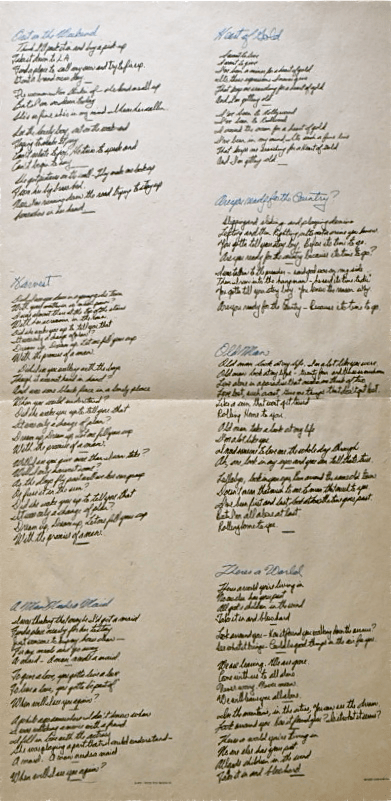
OK, I cheated. The last lyrics above are the final words to the last song on the album. But you get my point. It’s poetry of the highest degree, evoking heartrending imagery. Who was this young man? How at 26 did he know how to capture a listener’s soul, and keep it over the course of that listener’s lifetime, from young man to old? (“Old man, look at my life, I’m a lot like you were.”) Oh, that’s how.
In a career that has spanned 45 separate studio albums under the Neil Young moniker alone, which doesn’t count his work with Crosby, Stills and Nash or Buffalo Springfield, Harvest shines the brightest among a galaxy of brilliant stars. It’s an album so spectacular it spawned – not a sequel – but another album 20 years later called simply Harvest Moon which is probably a top 5 Neil Young album right there. Along with After the Gold Rush and Tonight’s the Night, Neil Young has the kind of catalog that any artist should rightly be envious of. And he has great records in this new century too. I can’t keep up!
The second time I saw Neil Young live was just a few weeks ago as of this writing. My son Henry and I made the trek to the Greek Theater in Berkeley – the site of Henry’s very first concert, The White Stripes, at five years old – to see the now 77 year old perform on a very short West Coast tour. Young was in fine form, playing alone, and just on acoustic guitars and various pianos set up around the stage. Of the 19 songs he played that night, I recognized only four, and only one from Harvest. The man has recorded over 50 albums of original material; the fact that he didn’t focus on my three favorite records from the early 70’s is OK. I’ve always been a firm believer that an artist is entitled to create and perform the art they want. We’ll either pay to see it or we won’t. But I tell you what, when the old man sang “Heart of Gold,” the only song from Harvest at that concert, I wasn’t even trying to pretend I wasn’t crying.
Harvest was special. You think of it as being stripped down, sparse, a young man and his guitar. Then you give it a re-listen and you remember the sweeping orchestration of “A Main Needs a Maid” and “There’s a World.” The intense piano/guitar conversation in “Words (Between the Lines of Age)” caps the album in a magnificent coda to what is truly one of the world’s best records.
Welcome to the top ten. I have a lot to say.
9. U2 – Achtung Baby
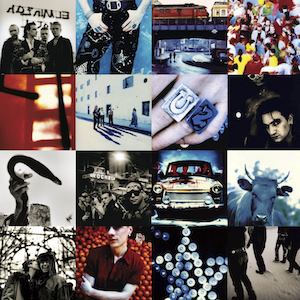
The top ten has put me in a frantic reordering mode. It took me a long time to get here. It started with making a little note in my iPhone about my top five favorite albums of all time. Then I expanded to ten, and finally to fifty, and eventually to one hundred. So U2’s stellar record from 1991 has moved up a couple notches as I finalize everything. I think I may have had it as high as six at one point, but this is the lowest it’s ever gotten. Nine. My 9th favorite album of all time is Achtung Baby.
These top ten albums mean a lot to me. I have a lot of stories about the records and the artists who made them. Whether these stories are interesting to you or not, I guess we’ll see. Mostly this is a document for me; for me – and maybe someday my kids – to remember and explore how I felt about music in my life, as it has always been pretty much the most important thing to me that doesn’t involve direct human relationships.
U2 became popular when I was in junior high school. In about 8th grade, I remember hearing “New Year’s Day” and “Sunday Bloody Sunday” just about everywhere I went. I have very specific memories of hearing these songs over the sound system at Supercade, an arcade at the corner of Oxnard and Whitsett in North Hollywood. Yes kids, there was once a time that folks would buy up an entire storefront, throw a bunch of quarter-per-play video games in it, and make a tidy living. Crazy Climber, Q-Bert, Dig Dug, Rampage, I played all these games at Supercade, along with the classics: Asteroids, Galaxian, Ms. Pac Man. No one was really interested in Space Invaders at this point. I think they had pool and air hockey there too, maybe ping pong. Tony‘s mom picked us up from Supercade once, and we were blazing high. She was mad that we were smoking weed at 13, and suggested we get together to masturbate instead. What the fuck? We laughed about that for a long time.
Even though by 8th grade I was firmly entrenched in my personal as a “stoner,” “rocker,” or “heavy-metaller,” I could not deny that those two U2 songs were bona fide ass kickers. I didn’t know U2’s stuff besides what I heard on the radio until I was 16 or so. But no matter which U2 songs the radio played (“I Will Follow,” “Pride (In the Name of Love)”) I recognized this was an incredible band with great vocals, music, and lyrics. I think my fellow stoners probably felt similarly, although few admitted it. This was a group everyone could love. U2 captured the 1980’s with that kinda hard rock kinda not sound that wasn’t new wave or trendy at all. It just kind of… was.
Then a lot of impactful things happened for me in the 1986/87 timeframe. (I promise, we’ll get to Achtung Baby eventually. Get used to this.) I got kicked out of my high school, went to a new high school, got suspended from there, overdosed and got sober, went to the rehab high school, came back to my original high school, and ended up in a continuation high school called Amelia Earhart, where I failed to graduate. That’s four high schools without ever changing my address, and none of them worked. Don’t worry, I eventually made it to college – UC Davis – and graduated with a bachelor’s degree. Still, it was a rocky road.
I’ve written earlier about the three albums that pushed me out of my hard rock/heavy metal mindset. One was The Cult‘s Love, and one was Talking Heads‘ Stop Making Sense. The third was War by U2, with the aforementioned “New Year’s Day” and “Sunday Bloody Sunday” singles. I adored that record, and for a minute I considered enumerating it here on this list as one of my favorites of all time. It was certainly more influential to me than any other U2 record, and every track on that album stands tall, ending with the perfect sing along, “40” (“How long, to sing this song?”)
But when I was 17, having been sober for about a year, and having made many new friends and embarking on a new lifestyle that didn’t revolve around smoking weed and being a stoner, “With or Without You” hit the radio stations in Los Angeles. It was maybe the greatest song I’d ever heard. It wasn’t folk, it wasn’t rock, it wasn’t a ballad, it didn’t have shitty keyboards, it was just a straightforward heart punch of a slow song. And you could relate to the lyrics. I can’t fucking live with you or without you. Who can’t feel that?
I leaned in hard. I started writing my own songs on an early machine that resembled a computer at Amelia Earhart High School, saving the lyrics on a 5 1/4″ floppy disk, but they all sounded suspiciously like “With or Without You.” The Joshua Tree hadn’t even been released yet, but I already felt like U2 was my favorite band on the strength of that single, the War album, and I had also picked up Under a Blood Red Sky and Wide Awake in America in the mean time.
We heard U2 would tour and play the L.A. Sports Arena, a 15,000 capacity hall where I saw a handful of concerts as a teenager in Los Angeles. We heard tickets would go on sale Saturday at 10:00 a.m. at Sportsmart. I forget where all they sold tickets back in the day, and I can’t even remember if the sporting goods store in the San Fernando Valley was called Sportsmart, but let’s say it was. We thought “Hey, let’s be really prepared and go there about midnight the night before! We’ll probably be first in line!” We were wrong.
The line stretched at least 150 people deep by midnight when we arrived, all the way down the shopping center sidewalk, past the Supercuts, the nail salon, the check cashing place, and the Subway. We sheepishly took our place in line way, way, way down in front of Radio Shack, wondering if we’d even get tickets. They were to play five nights; we didn’t care which night we would go, we just wanted decent seats to any one of those shows. And when I say we, I don’t even truly know what I mean. I don’t believe I had a steady girlfriend at that time, but lots of friends of both sexes who were music freaks like me. Maybe it was Brian, maybe India, or Nichole, or Sean, or Mace, or Barry. I honestly don’t know. I met a really cute, short, blonde girl in line, and she gave me her phone number. Her name was Cara Good (maybe Kara). I don’t think I ever called her. I don’t know how or why I remember that. I never saw her again.
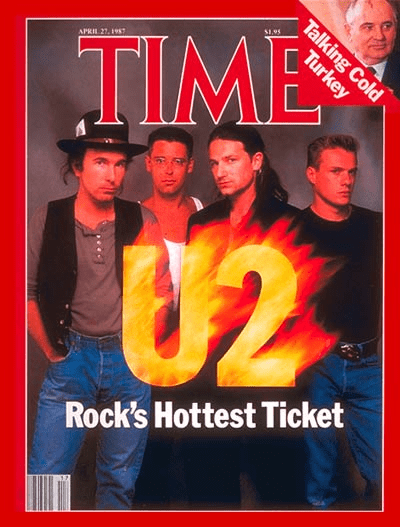
The next morning, after hanging out on the sidewalk all night, smoking cigarettes, making runs to Denny’s for coffee and food, our turn came. We got seats to the very side and slightly behind the stage on one of those nights, I think the fourth one. The Pretenders opened; they killed it, and U2 straight fucked shit up! By that time The Joshua Tree album had been released, they had hit the cover of Time magazine, and we couldn’t believe they were playing a venue as *small* as the L.A. Sports Arena! I had become an uber-fan. I loved – and I still love – The Joshua Tree with all my heart and soul. I also thought long and hard about including it here in place of Achtung Baby.
But I’m nothing if I’m not truthful here about the albums I love. I saw U2 a couple more times over the years, and when Achtung Baby came out in 1991, I was skeptical. Rattle and Hum had been released a few years prior, and while I liked it a lot, I felt that U2 was on that famous trajectory that bands take… build, build, build, make two or three great albums, then descend, descend, die. I figured The Joshua Tree was the apex, and now they would become a good band that I used to like a lot, but whose better days were behind them. The story plays out to this day with a lot of bands. But it didn’t happen with U2.
I was living in Sacramento by the time Achtung Baby was released in 1991. I had a little apartment in Natomas with a girl and our dog, Steve. CD’s were just kind of becoming a thing, at least for me. I bought Achtung Baby at Tower Records on Broadway, and I was absolutely blown away. To say my expectations were exceeded would be a criminal understatement. U2 had always been a pretty serious band, talking about love and loss and God and politics and serious things. They looked grim, and folky, and although they were incredible rockers, masters of their instruments and talents, they had become “A Thing.” They were a Serious Band. Some (not I) would call them pretentious – their Message becoming more important than their music. Achtung Baby turned all those notions right on their heads.
The record was bold. It starts off with some semi-industrial sounding riffs and noises as it launches the rocker, “Zoo Station.” From there, frenetic percussion, keys, and guitar bring you to “Even Better than the Real Thing.” Now you’re at “One,” and you realize it’s “With or Without You” on steroids and breaking the fucking home run record. I could go on about every track, but I won’t. Suffice to say that U2 had completely reinvented themselves, while staying true to the individuals they were, and continuing to make stellar music. I’ve only known David Bowie to make about-faces like this and come through so successfully.
The Sacramento Bee had a music and pop culture writer named David Barton, and he panned Achtung Baby. He didn’t get it. He didn’t even really criticize the music, he just though U2 was trying to make bubble gum rock because it got tired of being known as a “Serious” band, but that serious band was where the goods were. I wrote a letter to the editor refuting Barton’s review, claiming he missed the point entirely. U2 were reinventing themselves in the tradition of the best of artists (Bowie, Beatles, et al) and what they had produced was a gargantuan achievement. It was the featured letter in the newspaper the next week, with a quote of mine bolded and printed at the top of the page in the entertainment section of the newspaper. I was so proud! I cut it out and saved it, but Lord knows where it is now.
More than 30 years after Achtung Baby, it turns out that – at least for me – the album was in fact their apex. I liked their next record Zooropa OK, and they’ve had some decent albums since then, but nothing after grabbed me the way Achtung did. Many years ago my friend Matt invited me up to his buddy’s house out in the mountains. He and some of his crew were going to gather to listen to Achtung Baby on the 20th anniversary of its release. I was still sober then, and I watched them smoke their weed and drink their booze, maybe even drop a little acid, and listen to this amazing record, without anyone speaking, on his friend’s stereo system. Even sober, this was a transcendent experience. Now that I’m not sober anymore, maybe I’ll invite those guys over for the 35th anniversary in three years. It’s a timeless album that you can listen to from start to finish any time, anywhere.
A man will rise
A man will fall
From the sheer face of love
Like a fly on the wall
It’s no secret at all
8. Wilco – Yankee Hotel Foxtrot
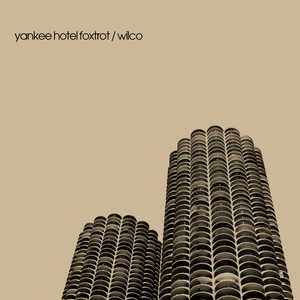
I came to Wilco out of Uncle Tupelo, like I guess many of their fans did. I liked Tupelo, and I appreciated the burgeoning Americana movement even if I didn’t fall head over heels for it. I watched Jay Farrar leave Tupelo to start Son Volt; they were OK. I saw Jeff Tweedy leave Tupelo to start Wilco; I liked them well enough. I bought Wilco’s first album, 1995’s A.M., and although I thought it was good, it didn’t blow me away.
I kind of forgot about Wilco until around 2002 or so, missing their next two – I later realized – amazing records: Being There, and Summerteeth. Wilco is another of the great bands who have put together a flawless four-album run, starting with Being There and Summerteeth, and finishing with Yankee Hotel Foxtrot and A Ghost is Born. I really came to Wilco after Yankee.
My friend Matt has great taste in music, and I’m not sure exactly how it happened, but he was the one who introduced me to Yankee Hotel Foxtrot. He lent me the CD; I burned myself a copy (remember doing that?), printed a black and white copy of the album cover, cut it out and placed it inside a blank CD case, put a sticker on the side and wrote in fine-point Sharpie, “Wilco – Yankee Hotel Foxtrot.”
And before you get on my case about stealing music by burning someone else’s copy, that theft earned Wilco a fan they might not have otherwise had. Since that appropriation, I have purchased: every single other Wilco and Jeff Tweedy CD, concert tickets to five Wilco/Jeff Tweedy concerts, extra tickets for the people I’ve brought to said concerts, two Wilco t-shirts, and one tour poster. So please forgive the burned Yankee CD, as I became obsessed with the band over the next few years, purloining multiple live bootlegs from the internet, burning them to CD with artwork and track listings printed, and filing them away in my CD collection. I eventually bought the vinyl version of Yankee, so my slate is clean.
You could say I’ve at times been obsessed with Wilco. I’ve ranked their studio albums in the order I like them, as follows:
- Yankee Hotel Foxtrot
- Being There
- Summerteeth
- A Ghost is Born
- A.M.
- Wilco (The Album)
- Cruel Country
- Schmilco
- The Whole Love
- Sky Blue Sky
- Star Wars
- Ode to Joy
People give me shit about ranking Sky Blue Sky so low. Literally, they come up to me on the street all the time, fists clenched, tears in their eyes, wailing at me for my unpopular opinion. But what are you gonna do? It’s no mystery to me that my top three favorite Wilco albums – Being There, Summerteeth, and Yankee – featured the incredible multi-instrumentalist, the late, great, Jay Bennett.
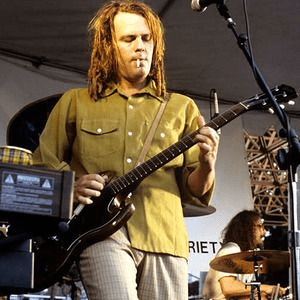
Bennett was prominently featured in the documentary film I Am Trying to Break Your Heart: A Film About Wilco, and was perhaps unfairly seen as a foil to Jeff Tweedy, and who was ultimately unceremoniously fired from the band. I’m a fan of Tweedy; Wilco has always been undisputedly been his band, and he seems to have found a stable of friendly, professional, long-time collaborators who don’t ruffle feathers. John Stirratt (the only member other than Tweedy to play on every Wilco record), Nels Cline, Glenn Kotche, Pat Sansone, and Mikael Jorgenson are incredible musicians whom I’ve seen live with Wilco many times. But I stand firm in my opinion that Wilco’s absolute best work was done with Jay Bennett. Bennett sadly passed away in 2009 at the age of 45 from an accidental Fentanyl poisoning, leaving behind a treasure trove of raw, poignant solo work. The masterpiece that is Yankee Hotel Foxtrot, my eighth favorite album of all time, was undoubtedly produced by the contributions of Jeff Tweedy, John Stirratt and the other band members of the time, but I think it was Jay Bennett’s work that really helped push Yankee over the top.
The album comes in at a slow roll, then you realize it’s like a locomotive building up speed until “I Am Trying to Break Your Heart” begins it’s alliterative lyrical journey:
I am an American aquarium drinker
I assassin down the avenue
Yankee is the most inventive album, lyrically, that Wilco has produced. And musically as well. It has its bangers, if Americana has bangers: “Kamera,” “Heavy Metal Drummer,” “Jesus, Etc.,” “I’m the Man Who Loves You.” But the slow jams on the record really hit you in the feels, like “Radio Cure,” “Ashes of American Flags,” and especially “Poor Places” and “Reservations.”
Not being a real music writer – simply being someone writing about how music makes me feel – I don’t know how to describe which instruments are rising and falling, pulling you in and pushing you back out, what tempos are used, and then constructing perfect metaphors to describe them. I’ll leave that to Pitchfork and Chuck Klosterman. What I can tell you is that this record changed my life. Of these top ten albums, Wilco is the band I came to the latest: in my thirties. To become obsessed with a band in your thirties, buy all their records, see them live every time they come within a hundred miles of you, that’s a feat.
Yankee Hotel Foxtrot is an album to get stoned by, to make love by, to lay on your back in a field and stare at the night sky to. It is a triumph of the highest order, and the pinnacle of one of America’s most enduring rock band’s contribution to our unique landscape. This could have been my #1 album. It never gets old. I could tuck this LP under my arm as I skip off into the afterlife someday.
I
Have reservations
About
so many things
But not about you
7. Pink Floyd – The Wall

Writing about my top ten favorite albums is a little bit like playing the end of a video game. Boss levels beget boss levels beget boss levels. How am I ever going to beat this boss, only to face what’s next? How am I going to write about Neil Young, then U2, then Wilco, then Pink Floyd, and what the hell even comes after this? Each task seems more impossible than the last.
Like so many on this list, The Wall could have been #1. It is a beautiful, heartbreaking, lonely, intense treatise on isolation, fear, and despair. Even without the story it tells: the music. Rock and roll rarely gets better than this. Sweeping orchestrations and choirs (“Bring the Boys Back Home”); Delicate acoustic guitar work (“Goodbye, Blue Sky”); hook-y, fist-pumping radio hits (“Another Brick in the Wall, Part 2” AKA “We Don’t Need No Education”) enduring classic rock scorchers (“Young Lust,” “Run Like Hell”); and potentially the greatest rock song ever written (“Comfortably Numb”).
I admit that for most of the albums I’ve written about here I’ve needed a little refresher with the track order, and sometimes a reminder of the full catalog of songs on the album, but not so with The Wall. I know each note and syllable of this record probably better than any other, including the six that I’ve ranked higher.
I’m sure I first met Pink Floyd at about age 10 when “Another Brick in the Wall, Part 1” became a massive radio hit. I’ve loved rock music since I was about five years old, but by ten I hadn’t yet discovered what I later considered to be “real” rock music. Still, when I look back at my very early record collection I see some cool stuff alongside Mickey and the Beanstalk and the The Story of Star Wars. I had at least a half dozen KISS records, the Grease soundtrack, the Saturday Night Fever soundtrack, Best of The Beach Boys Vol. II, and Devo’s Freedom of Choice, alongside Gary Numan’s The Pleasure Principle (these latter two solely because of the huge hits spawned by them: “Whip It,” and “Cars,” respectively.)
But I don’t think at age ten I even knew the artist who sang this awesome song on the radio. I didn’t know that we did not, in fact, need no education. The Wall was the first Pink Floyd record I owned, the terminus of their flawless four-album run of The Dark Side of the Moon, Wish You Were Here, and Animals. I can’t remember where I bought it, or how old I was, but it would have been right around when I was 13. I may have been aware of other radio hits other than “Another Brick in the Wall, Part 2” by then, like “Young Lust,” “Comfortably Numb,” and “Run Like Hell.” Who knows?
What I knew was that as soon as I dropped the needle on that gorgeous gatefold double LP, with liner artwork by the inimitable Gerald Scarfe, I was transfixed by the tale of baby Pink, safe in his mother’s arms, moving through pain, fear, anxiety, fame, fortune, betrayal, and judgment as he builds his wall and watches it get torn down. Tell me you can’t relate?
I played this record so much, and at such volume, that I think I actually imprinted it on my soul. As I moved from the vinyl I listed to as a child and a teenager, to the cassettes of my late teens and early twenties, to the CD’s of my mid-twenties and thirties, to the digital music of my forties, and back to the vinyl I started acquiring again in my fifties, I never re-purchased The Wall. I’ve listened again several times on Spotify, and truth be told, I’d love to pick up the vinyl album again. But I haven’t needed to. I can summon the album into my brain simply by thinking about it. It’s weird: I don’t really need to listen to it; it’s just, kind of, always there. More than any other record, including the six that are going to follow, it’s just there.
The Wall is the most significant album that has appeared in my life. It’s hard for me to articulate why it’s not number one. I think because this is simply a list of my favorites. Not the most influential, artistically relevant, musically proficient, or even impactful to me personally. It’s just my faves. The Wall is intense. It is a huge, sprawling, beast. I’d crank and literally hide under my bed and cry while my mom and stepdad screamed and threw dishes at each other. It hurts me, and I love it right back. Almost out of spite, I can’t place it number one. It’s a record that used to have a lot of power over me, and I need to leave it here at number seven. Still, I’m not done listening to it. I don’t think I ever will be.
6. The Beatles – Abbey Road

Have we finally made it here? The Beatles, really? This was almost a coin flip with The White Album, but ultimately I had to go with the final album that the Fab Four recorded together.
I carve out my rock music fandom into various sections, and Abbey Road played a seminal role in the most important era: The Teenage Album Years. As I have perhaps mentioned in this piece, I’ve been accumulating (I don’t say collecting) records and music since my sister Nicki bought me my very own copy of Best of the Beach Boys, Vol II for Christmas when I was about five years old. As I mentioned above in discussing Pink Floyd The Wall, between the years that I was five and eleven I accumulated the following albums, all on vinyl of course, it being the 1970’s:
- Kiss – Alive
- Kiss – Alive II
- Kiss – Hotter than Hell
- Kiss – Love Gun
- Kiss – Destroyer
- Kiss – Dynasty
- Kiss – Double Platinum
- Devo – Freedom of Choice
- Gary Numan – The Pleasure Principle
- Grease – Original Motion Picture Soundtrack
- Saturday Night Fever – Original Motion Picture Soundtrack
- The Beach Boys – Best of the Beach Boys, Vol. II
- Various Star Wars, Disney, etc.
I think that was about it: seven Kiss albums and a few others. I stand by these records; the non-Kiss albums were all excellent, and while *all* those Kiss albums may not go down in history, Destroyer is a badass studio record by the band, and Alive and Alive II are pure fire!
Not to discount any of those groups, nor the movie soundtracks, but my musical tastes were, it would be generous to say, unsophisticated at the time. I liked stuff they played on the radio, like Donna Summer, Johnny Lee, Eddie Rabbit and Hall & Oates. But that’s fair for being 11 years old, right? My favorite TV shows were The Love Boat and The Dukes of Hazzard, so who cares?
But the next and still most important phase of my fandom came at Christmas when I was 11 years old. John Lennon had been assassinated just a couple weeks earlier. I’ll never forget my stepbrother Mark running through the house yelling “John Lennon was SHOT!” I knew the name. I thought to myself, “I think that’s a guy from The Beatles!” But I didn’t own a Beatles record and I didn’t know if I could name any of their songs if I’d heard them, although they’d surely been bouncing around at the periphery of my life for years.
Then on Christmas a couple of weeks later, a gift appeared for me under the tree; it looked like an album! But what did my Jewish step-grandparents, the benefactors of said gift, know about good music? Nice of them to buy me a record, but I dreaded the thought of having to pretend to be excited the next morning over what I was sure would be music to appeal to old people. I was never a present peeker, but I would sometimes try to push the peeking boundaries. I would press what was hopefully thin wrapping paper against the item inside to try to read whatever was printed on the box or package. On this record I could make out the letters “EY” and “RO” and that was about it. Oh great, I thought, it’s the Benney Royale Orchestra. I actually thought that, and came up with that name. Well, the B.R.O. was not an outfit that existed then, now, or any time in between. Still, I was dreading the next morning.
The next morning, I found that instead of the Sony Walkman I wanted, my mom and stepdad had bought me a different portable cassette player/radio combo called the GE Escape. Ungrateful little shit that I was, I was pissed off that I didn’t get the Walkman I wanted, although I tried not to show it. The Walkman in those days was the ultimate status symbol, but probably cost $100 to the Escape‘s $60. Who knows if the Walkman was the superior music player, but my middle-class parents (OK, they leaned more toward upper than lower middle class, but they were VERY money conscious, as my stepfather’s law practice provided either feast or famine. It felt like it was always famine) unknowingly taught me a valuable lesson: when it comes to consumer goods, better extra money in your pocket than a fancy label.
But I acted happy. And truthfully, I played the hell out of that GE Escape for several years. But the next present up would require my acting chops to reach Academy Award levels when I opened my grandparents’ album. I tore the paper, gazed upon it – expecting to see Benney Royale himself, a veritable Lawrence Welk lookalike, on the cover – but instead I shit my pants. On the front, four men walking across a street. The image looked familiar. The men looked familiar. On the back, in giant white capital letters on a black background upon a brick wall: BEATLES – ABBEY ROAD.
The Beatles? I now owned a Beatles album? THE Beatles, that the world had been talking about non-stop since Lennon was killed a couple of weeks prior? And let’s face it, the same Beatles the world had been talking about my entire life. Which one is John Lennon, I asked my brother. That one, in the front, in the white suit. And that one’s Ringo, and there’s Paul, and George. He then filled me in on the Paul Is Dead lore and the hidden symbols the album cover revealed, like 28IF. I was fascinated.
I played the record that night, and I’ve been playing it for the last forty plus years. It was the last album The Beatles recorded together, and the very first of my most important era of rock music listening. I could not have been more ecstatic. Mel and Harriet Springer, long gone you may be, but this today 53 year old man thanks you again, sincerely. You were good grandparents and I miss you. For Abbey Road and for other reasons.
Musically, it’s a roller coaster of brilliance, with ebbs and flows, and highs and lows, but nowhere does it suffer. The opener, “Come Together,” is kind of a microcosm of the whole record: funky, slow, fast, loud, quiet, serious, funny. Kids in the 6th grade later that year performed it at the talent show. In the days before accessible karaoke and instrumental versions of songs, these kids just had the sound man – Mr. Marshall, the maintenance man – turn the actual song down low enough to where you could hear the kids singing, and also enough of the music to know there was music, but not enough to where John Lennon’s voice would overpower. They weren’t bad!
“Come Together” leads to “Something,” a George Harrison joint, that is absolutely gorgeous. Simply one of the most beautiful Beatles songs ever recorded – right up there with “Yesterday,” “Blackbird,” and “Hey Jude” from other albums. “Something” gives way to the first of four semi-novelty tracks on the record; I hope it’s not sacrilege calling a Beatles song semi-novelty, but there’s a difference between songs like “Rocky Raccoon” from The White Album and “The Long and Winding Road” from Let It Be. It doesn’t mean that Rocky Raccoon is an objectively worse song because it’s less serious; it’s just as likely to get stuck in your head all day as songs about guitars gently weeping. Abbey Road does the best job, in my opinion, of weaving in the semi-novelty songs with beautiful songs and serious bangers, and it starts with “Maxwell’s Silver Hammer.” As an eleven year old, I adored it! Someone getting sneakily banged on the head with a hammer after slighting young Max? Sign me up!
After this, “Oh Darling” is a bluesy, badass romp, an ode to the girl Paul doesn’t want to leave him. “Octopus’s Garden” is one of Ringo Starr’s very few Beatles songwriting and lead vocal contributions, and even if you want to call it a novelty song, it’s a real beaut. Who wouldn’t want to be so happy, you and me, no one there to tell us what to do. Finally, a perfect side one finishes with Lennon’s “I Want You (She’s So Heavy),” a deeply trippy, bluesy number than ratchets up to pure psychedelia over the course of seven and a half minutes and then abruptly stops mid note. Side one is over. Either wait for your turntable to auto-return to “Come Together,” the other trippy Lennon piece on the side, or flip the thing over for…
“Here Comes the Sun:” The Beatles’ most-listened-to song on Spotify. Inarguably one of their best songs; arguably THE best. Another George Harrison number, and with this he puts a cap on his published Beatles contributions. The Beatles of course were mostly Paul’s and John’s band, but George’s songs were many, and outstanding. Besides the two masterpieces on Abbey Road, George gave us “While My Guitar Gently Weeps,” “I Me Mine,” “Taxman,” “If I Needed Someone,” “Only A Northern Song,” “Think For Yourself” and others. It’s hard to imagine The Beatles without some of these songs. But “Here Comes the Sun” is pure gold: A beautiful song, and an anthem known the world over heralding the coming of spring and the hope that is surely right around the corner. What a perfect way to introduce side two of Abbey Road, after the full stop at the cacophonous ending of “I Want You (She’s So Heavy)” from side one.
From here, the potentially best Beatles song ever gives way to – I hate to say it – my least favorite song on the album, “Because.” That’s not to say it’s a bad song. It’s beautifully tracked with John’s, Paul’s, and George’s voices harmonizing, and re-recorded twice and laid on top of the original for what sounds like nine voices, a veritable Greek chorus, chanting about the majesty of love and life while a harpsichord jangles in the background. It’s a song for doing acid to, but if this was the Beatles’ best song ever, I think very few today would have ever heard of the band.
But again, “Because” is not a bad song, and to me it serves an important purpose on the record: that is, gearing up for the remainder of side two, which apparently Paul and producer George Martin intended as a kind of finale for the Beatles as a band. Paul plays some gorgeous piano and begins singing “You Never Give Me Your Money” as the song winds its way through various distinct segments, none of them too similar than the one before it, a style that I don’t hear much anymore (Think “Layla” or Paul’s later “Band on the Run”). This song leads right into the song I mainly think of as the prelude to “Mean Mr. Mustard,” but it’s its own song, “Sun King.” Another nice little break setting up the rest of the album, and the finale of the Beatles’ career. I’ve always thought it was funny that three tracks after “Here Comes the Sun” there’s a song with the lyrics “Here comes the sun….king.” The band even pauses a little bit before they say “king.” I think they’re playing with us a little bit, with a slower, trippier, version of “Here Comes the Sun” that sounds nothing like it. There’s a message here: something good is coming. And it does.
I so look forward to the trifecta of “Mean Mr. Mustard/Polythene Pam/She Came In Through The Bathroom Window,” “Sun King” really does seem like an extended intro. The Beatles, for all their accolades, their position as the “best” or “most influential” rock band of all time, and for all their “Let It Be’s” and “Long And Winding Roads,” “Yesterdays,” and “Hey Judes,” there are some songs where they’re just having a lot of fun. The “Mustard/Pam/Bathroom” medley was never designed to become hits; they simply had to be songs that made the “Greatest Band Of All Time” laugh amongst themselves. And they are KILLER songs! “Such a mean old man, such a dirty old man,” “She’s so good-looking but she looks like a man,” (predates “Lola”) “Sunday’s on the phone to Monday, Tuesday’s on the phone to me, oh yeah!” These three songs are small tales told to the delight of the tellers, but they rock in a way that “novelty” songs seldom do. They are the final laugh of the world’s favorite band before the next three-part medley that effectively ends The Beatles’ career.
Because it’s not a laughing matter anymore. (Well, not until “Her Majesty.”) After “She Came In Through The Bathroom Window” we get a full five seconds of silence. The Beatles are letting us know we’re in the final act now. That is to say, The Final Act. Of their existence as a band. It’s almost too emotional to write about or think about. Here in the 2020’s, Paul is still – as of this writing – alive and well and producing albums and touring (heavy on Beatles material). Ringo is alive and doing whatever Ringo does. John and George are long gone, of course. (Justin Timberlake and Britney Spears have now lived longer than John Lennon did, while Lenny Kravitz and Courtney Love have been around longer than George Harrison was.) But with the opening piano of “Golden Slumbers” and Paul singing:
Once there was a way
To get back homeward
Once there was a way
To get back home
It was The End. Not the song “The End;” that comes two songs later. But it was The End. The end of the best, most influential, most revered, most fun, zaniest, craziest, funniest, most creative, most intelligent, most maligned band in the history of rock and roll music. Of pop music. Maybe of all music ever. Although this is my sixth favorite record of all time, I sincerely believe that if humans are around in a thousand years, and if I had to put hard cash on a single pop music artist who would be remembered, it would be The Beatles. And that’s no offense to Michael Jackson, Madonna, Kanye West, Prince, Taylor Swift, BTS, Elvis Presley, or Beyonce. It’s The Beatles. It’s always going to be The Beatles.
The gorgeous “Golden Slumbers” segues cleanly into “Carry That Weight.” They are practically the same song. Most of the lyrics are simply:
Boy, you’re gonna carry that weight
Carry that weight
A long time
That’s pretty much it. And Paul did. And Ringo did. And so did George and John. Maybe John more than anyone. John carried it and got murdered for it in front of his home, in front of his wife, Yoko Ono, longer ago now than he had years on this planet. This band carried the weight. Despite John’s “Imagine,” and George’s Traveling Wilburys, and Paul’s “Band On The Run,” and whatever interesting things Ringo has been doing – I’m sure there are many -, they were The Beatles. You can never put that weight down. John may have come the closest, then maybe Paul. But I saw Paul in concert last year and he played about 80% Beatles songs and maybe 20% Wings and other songs. He knows what we were there to see. You can’t ever stop carrying that weight. It’s not fair. It’s not right that a person has to carry the thoughts and dreams and tears and loves and memories of tens of millions of people, but that’s the weight the four lads from Liverpool picked up. Paul and Ringo are still carrying it. John and George have finally had the chance to lay it down.
And finally, “The End,” the last of this final medley, which appropriately does not beleaguer weepy feelings about the final (well the real final) track of The Beatles’ last album. And the last song that all four Beatles recorded together. It’s a pretty rocking number, about two minutes of crashing drum solos and dueling guitars by George and John. Until the end of “The End.” The guitars and the drums stop abruptly, and we’re left with Paul and his piano, singing:
And in the end
The love you take
Is equal to
The love
You make
And that’s it. That’s a wrap on a career, on a band, the weight of which the collective members never could quite put down. The ones who could not quite convince the world that The End had actually come. No matter how many “Jealous Guys” (John) or “Maybe I’m Amazed” (Paul) or “My Sweet Lords” (George) or “Photographs” (Ringo). Great songs all, but “It” was over. This, the true final Beatles album, is their best album. Their most complete, their most emotional, their most rocking and their most heartfelt. It was their last and best statement to the world. It was over.
Until “Her Majesty,” a 20-ish second hidden track that was a fun romp and a poke at the Queen of England. Apparently it was originally intended to be placed between “Mean Mr. Mustard” and “Polythene Pam” in that medley, hence the abrupt beginning and ending of the song. The Beatles didn’t like how it sounded in there, and had it removed, but a sneaky engineer hid it in the very end of the record. “Typical Beatles – an accident,” as Paul would later say. But could The Beatles have ended any other way?
So this is how my sixth favorite album of all time is quite possibly the greatest album of all time. Go figure.
5. Liz Phair – Exile In Guyville
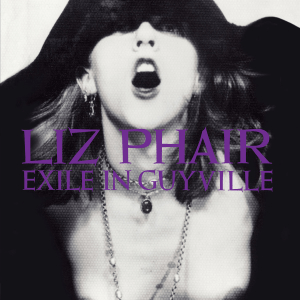
Wait, what? Ahead of The Beatles, Pink Floyd, and Neil Young? Liz Freaking Phair makes the top 5 where Wilco and U2 don’t? What can I say? Exile In Guyville is a rock and roll album that is true perfection, from start to finish, in every possible way, shape, and form.
I’m sure I got turned onto Liz Phair the way I got turned on to almost all music in the 80’s and 90’s: by reading about how great she was in the pages of Rolling Stone or Spin magazine. Remember, these were the days when an album was a mystery. Maybe you heard hits on the radio, or if you’re lucky a friend had the record (but then did you *really* need it also?), and I guess theoretically you could buy a 45 or a cassingle, although those were not formats I ever purchased much. Maybe you don’t remember me saying this, but I’m an album guy. The rock magazines of the late 80’s and early-to-mid 90’s had profound influence over the records I bought. But I was also let down as often as not by their recommendations. I’m looking at you Teenage Fanclub, Tragically Hip, Pooh Sticks, Cell, Veruca Salt, and to a certain degree Pavement and Dinosaur Jr., although with the latter two I tried and tried and tried. (Pavement and DJR are great bands with tons going for them, but they were also bands that I felt like I was supposed to like a lot more than I actually did. With Pavement I tried really hard, and bought quite a few of their CDs.)
I don’t remember a specific article, cover story, or record review that turned me on to Liz Phair. It could have been her association with Urge Overkill (see #29), with whom I had been obsessed a year or two before. My first memory is owning her debut album on CD: Exile In Guyville, and listening to it over and over and over and over in my apartment at what later became known as the Flop Haus at 21st and I Streets in Midtown Sacramento. That was before people called it Midtown. Everything on the grid was just Downtown. My good friend Justin may have discussed that in his excellent piece here. Or maybe he didn’t.
I had heard that Exile In Guyville was a “song by song response to the Rolling Stones‘ Exile On Main Street.” The Stones’ Exile was an album – kind of like Pavement and Dinosaur Jr. – that I knew I was supposed to love, but I just didn’t. I liked it, don’t get me wrong, but it was barely in the top ten of my favorite Stones albums. For me, it doesn’t hold a candle to Some Girls, Sticky Fingers, Beggar’s Banquet, Let It Bleed, or even their earlier work like December’s Children, Aftermath, or Between the Buttons. At least to my ear. But there’s no accounting for taste, right?
Honestly, the Exile/Exile alleged project is the least interesting part of Phair’s album to me. I’m not positive it’s true. Yes, each album has 18 tracks and they both have the word exile in their name; clearly Phair was trying to draw some kind of comparison. Many of the guitar parts are Stonesian, bluesy riffs, which if magically inserted into less-known Stones songs with Mick singing and Keith playing lead guitar, I really think no one would skip a beat.
But a theme that I’ve noticed in my consumption of music, film, TV, art, and literature throughout my life is that I am more or less uninterested in how the thing was made, or what meaning is intended behind it beyond what I take from my own mindset while experiencing it. (And in case my children or ex wife ever read this, my dutiful watching of all the Lord Of The Rings Extended Edition DVD extras in the early 2000’s was a special case. A one-off. Something I felt the hefty price tag of the pre-Blu Ray DVD box set demanded. The stuff was interesting, but it also showed in stark relief how fake it all was, despite how rigorously crafted. What, movies are fake? I haven’t watched a “making of” since.)
So is Exile in Guyville a song-by-song response to Exile on Main Street? Maybe. Who knows? Who cares? Here’s what I know: Guyville is a motherfucking, ass-kicking, names-taking, supersonic explosion of bad bitch rock and roll brilliance. I love and am obsessed with great lyrics that mean something to me, but they are not required. Who the hell knows what the Pixies were singing about? Mainly aliens, I think. (Wait, Pixies? How come we haven’t read about The Pixies yet? Hmmm….) Liz Phair does not slur her words, or scream lyrics, or sing in a weird accent, but there is an odd cadence to her vocal style. Maybe it’s purposeful or maybe it’s just me. But it seems like a mismatch between the traditional rhythms of sung verses alongside the chords and their transitions in rock music. In other words: she’s singing clearly, but I don’t always know what she’s saying.
But what is she saying? She’s saying a lot. It’s a treatise on loneliness, abuse, failure, and also partying, ripping it up, fucking, and generally being a young woman in the big city in the 80’s and 90’s. Here are some of the things she says:
I bet you’ve long since passed understanding
What it takes to be satisfied
I lock my door at night
I keep my mouth shut tight
I practice all my moves
I memorize their stupid rules
You are shining some glory on me, on me
Now all we gotta do is get a preacher
He can probably skip the “until death” part
‘Cause Johnny, my love, you’re already dead
So don’t look at me sideways
Don’t even look me straight on
They say he’s famous, but no one can prove it
Make him an offer just to see what he’ll say
Tell him to jump higher
Tell him to run farther
Make him measure up
Ten times longer than you ever should
I jump when you circle the cherry
I sing like a good canary
I come when called
I come, that’s all
Don’t you know nobody parts two rivers met?
But I heard the rest in your head
And almost immediately I felt sorry
You’ve been around enough to see
That if you think you’re it, you better check with me
And it’s true that I stole your lighter
And it’s also true that I lost the map
But when you said that I wasn’t worth talking to
I had to take your word on that
But something about just being with you
Slapped me right in the face, nearly broke me in two
Everything you ever wanted
Everything you ever thought of
Is everything I’ll do to you
I’ll fuck you till your dick is blue
I think I’ve been taken
For everything I own
I’ve been hurt so badly
I’m alone, baby, I’m alone
Seems like the small things are the only things I’ll fight
But once I really listened the noise just fell away
Nothing feeds a hunger like a thirst
So there you go. Snippets of 18 songs. Are they song-by-song responses to the 18 tracks on Exile On Main Street? Who knows? Who cares? But it’s a novel of an album, without being a “concept album” really. Girl has fun, girl gets hurt, girl has fun, girl gets hurt, girl moves on. I mean, besides the girl part, it’s kinda sorta my story too. Maybe that’s why the album speaks to me so much.
Sometimes in the course of writing these album posts I check in with Wikipedia. What exactly is the order of the songs? Who was playing lead guitar on this one? I’m sure the internet has a lot to say about this album. But I don’t care. I don’t really even want to know. In 2018 the box set Girly-Sound to Guyville – one of the very last CDs I ever bought before moving exclusively to vinyl and Spotify – was released with extensive, like novel-length, liner notes about the creation of Guyville‘s songs. Liz had to play and practice in her bedroom and if memory serves (what, research?), she learned to play and sing quietly so as not to disturb her roommates and neighbors. She does not produce quiet music, but there’s a certain muted rhythm to her songs, so much so that learning this information was no surprise to me. In fact it made this album, and her next: the outstanding Whip-Smart, make a world of sense.
Exile in Guyville is a record – honestly, like most on this list, especially the ones in the top 20 or so – that *always* pleases me when I turn it on. It’s never the wrong decision, the wrong album to play. And I will play the whole thing. It’s like slipping on your favorite warm jacket on a cold winter day. It fits perfectly.
Again, it wasn’t so much the lyrics on this record that got to me as it was the snippets of them heard through the rollicking guitar, thrumming bass, sublime drumming, and Phair’s perfect voice: alternately raspy and almost talky, with her falsetto-high background vocals. Is she talking to you or singing to you? Sometimes she’s definitely singing, but she’s also narrating her – or at least her protagonist’s – adventures, slowing down to make sure you hear her clearly hitting the right beats, both with the music and the vocals. But also not. When you hear some artists speak in real life, they don’t sound anything like you imagine they’d sound from listening to them sing their songs. I don’t know if Liz does or not. I’ve heard a couple of interviews, but I have not gone back to revisit them. I think she – the royal She, the singer of these songs – sounds precisely like the woman in the songs. Does Liz Phair even exist? Does it matter? In terms of how I feel about this record, not really. I don’t mean that as an insult. Obviously she’s a real human being, a little bit older than me, and I hope she’s happy and healthy. But in my role as a listener of this record, it doesn’t matter. When I’m playing this record, I’m somewhere else. I’m in this woman’s story. And no matter how many times I listen to it, I’m enthralled.
So, is this a more important album than Abbey Road? Does it hit as hard emotionally as The Wall? Does it speak to the young man I once was louder than Harvest did? Maybe not. But I tell you what, when it’s time to throw on a record I love, and know with 100% certainty that it’s gonna be the single right choice for that or any other moment, well, there are only four other albums I can say that about.
4. Beastie Boys – Paul’s Boutique
We’re down here in the thick of it, Fam. My fourth favorite record of all time. Where to start…
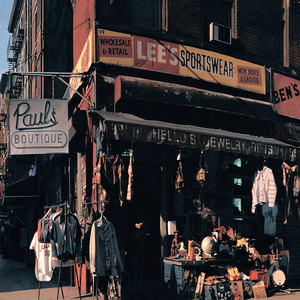
I first heard Beastie Boys like a lot of people did: the “Fight For Your Right To Party” song from their debut album License To Ill. It was a big radio hit in 1987. They’d play it unironically on rock stations, and I hated it. I thought it was stupid, I thought the lyrics were lame, and although the riffs were crunchy and the guitar solo pretty sick (I didn’t know it was from Slayer‘s Kerry King at the time), the music didn’t do much for me. Of course, I didn’t realize it was a poke at 80’s bro/rock culture and a not-so-veiled jab at suburban punk rock disaffection. I even thought the band’s name was stupid. Beastie Boys? Fuck them!
But somewhere along the line I started hearing songs like “Hold It Now, Hit It,” “Paul Revere,” and “No Sleep ‘Til Brooklyn,” and they sucked me in. I was never any kind of DJ, but more than a handful of times I’d bring a bunch of records and cassettes to dance parties and try to get the people either boppin’ or rockin’ out. By this time I had procured License to Ill on cassette, and the record grabbed me and never let me go. I would listen to License to Ill nonstop after that.
But the song “Fight for Your Right to Party” never really grew on me. I’ll still sing along with it these days, but I realize now it’s a highly ironic riff on white rock/punk culture. Between 1987 and 1989 I had a daily half-hour-minimum commute from North Hollywood to Pasadena to my job in my 1979 Chevy Malibu that I bought from my friend Eric for $800, as I may have mentioned before. It was a good car for several months, but eventually would only go in reverse, so I had to abandon it on the LA streets to get towed away like I did so many shitty cars back then. The Malibu’s radio was crap, so I kept a boom box in the front seat, and I played “License to Ill” for probably six months straight on this commute. “Girls” – an almost equally annoying song to me as “Fight for Your Right” – was at the end of side one of the tape, and “Fight” was at the beginning of side two, as I recall. So as soon as “Girls” came on I would fast forward to the end of the cassette, flip it, and forward about a 15 count to skip “Fight” and jump right into “No Sleep ‘Til Brooklyn.” So out of 13 tracks on the Beastie Boys debut record, I would routinely skip two of them, but the remaining 11 became burned into my brain. It was pretty much this white boy’s introduction to rap music in the 80’s, and I was hooked.
License to Ill was a great record. It was juvenile, lyrically, although complex in parts. The rhyming and rapping was incredibly deft in the pass-the-mic / call-and-response style of that time. I still listen to it and I can sing along with almost every lyric. I love it unabashedly, and I always will. The remaining Beasties (RIP MCA) and I have grown older over the years, but I will still bust out a little “Paul Revere” from memory at a party from time to time:
Now here’s a little story I got to tell
About three bad brothers you know so well
It started way back in history
With Ad Rock, MCA, and me, Mike D
So the big question after the phenomenon of License to Ill was: despite it’s goofy, beer guzzling, pseudo wannabe gangster, misogynistic overtones, would the Beasties do next? The answer was Paul’s Boutique.
I can’t think of a more highly anticipated record. Anticipated by me, by the nation, hell, by the world. Would the B-Boys try to capture their freshman glory with ever more tales of “Beer drinkin’ breath stinkin’ sniffin’ glue”? Would we like it? We sure hoped so. It took three full years to find out.
I was working at a record store when my fourth-favorite album of all time dropped. The store was Sam Goody, one in a large chain, in Costa Mesa, California. Costa Mesa is the less-fancy town over from Newport Beach, where my mom and stepdad lived, and where I was staying for the summer of 1989. At that time, record stores were diving head-first into CDs, but cassettes were probably still the biggest selling music format. However, these stores also doubled as video rental headquarters, and that’s where I spent most of my work life, checking in customers’ VHS copies of Mississippi Burning and checking out Uncle Buck. I was happier working the front register, where people bought CD’s by the bucketful, where fun, brief, conversations about music could be had. I had seen most of the movies we rented, but I didn’t have a lot to say about Three Men and a Baby. However, I did have a lot to say about Rush.
The best part of the job was closing time (shocker!). The customers got kicked out, the doors were locked, and we had a rotation system where the employee whose turn was up got to pick the cassette to blast over the store’s sound system while we sorted VHS tapes, vacuumed, and buttoned everything up for the night. It took about an hour. On July 25, 1989, a Tuesday, the Beastie Boys’ long-awaited follow-up to License to Ill was due to be released. All we knew about it was that it was called Paul’s Boutique, whatever that meant. But the shipment of new cassettes and CDs arrived on Monday, July 24, an evening when I was working, and closing. Another guy who worked there whom I’ll call Michael – because the only thing I can remember about him 34 years later is that somehow in my brain he morphed into the actor Michael Rappaport – was also a giant Beastie Boys fan. The assistant manager, Jay, told us we could OPEN AND PLAY Paul’s Boutique over the store sound system as we closed on Monday night! THE DAY BEFORE THE ALBUM’S RELEASE!!! This was a violation of certainly dozens of American and probably hundreds of international laws. You do NOT fuck with product before the release date. But it was 10:00 p.m., and although Jay wouldn’t let us buy the tape with our employee discount a day early (Boooo, Jay!), he figured it was OK to just play it. We kept a lookout at the front of the store in case the ASCAP commandos tried to swarm in, as we were sure happened regularly in record stores throughout the land. The was only one problem: Esselle.
Esselle was a tall, new-wavy guy that we called Asshole behind his back, because, well, his name was pretty close. He wasn’t a bad guy. Michael and I figured he was gay, and I’m ashamed to say we’d snicker about that supposition amongst ourselves over strip mall Kung Pao Chicken. Esselle put the kibosh on our Beastie Boys plan by insisting that it was his night to choose the music. “Come ON, Esselle!” we pleaded. “It’s Paul’s Boutique!!! We’ve waited three years for this!!!” He was steadfast. He wanted to play Simply Red’s A New Flame and we were incensed. “ESSELLE!!!” we screamed at him, “Nobody wants to hear that homo music tonight! We have special permission from Jay to play Paul’s Boutique!” Esselle was ecstatic in his rebellion. Jay was no help, “Well, it’s Esselle’s night.” Ugh!
Finally Esselle (Asshole) compromised. He’d play the first half of the Simply Red cassette while we cleaned up, and we could then play Paul’s Boutique. “Goddammit Esselle, the Beastie Boys tape is about an hour long! We could listen to the whole thing! You can have our next two nights!” He didn’t care, and wouldn’t budge from the concession he was giving us. Jay was encouraging compromise, as the floors went unvacuumed, and the videotapes went unorganized, extending our cleanup time well into the wee hours.
So we listened begrudgingly to Esselle’s shitty music for 20 or 30 minutes, and then we dropped our vacuums, removed our cleaning gloves, and raced over to unbox our precious little cassette. The first thing we noticed was that the liner was extensive, folded a great many times and stuffed into that little plastic cassette case. Clear cassettes were the rage now; gone were the bland tan and white cases of your older siblings’ Steely Dan and Foghat tapes. The print on the cassette sleeve was tiny, but it held every single lyric on a very dense album. We popped it in the Sam Goody store stereo system, cranked up the volume, and…
We didn’t hear anything. Was something wrong? License to Ill blasted you with John Bonham‘s epic drum riff sample from “When the Levee Breaks” to start that record. Why weren’t we hearing anything? Wait…there it was, after what seemed like an eternity: an extremely quite drum beat, a keyboard melody – very chill, very jazzy – then MCA begins a quite dedication “To all the girls…” (the title of the opening track). The same mellow drum beat continues, the jazzy little keyboard melody gently swoops up and down and around like a lazy bird in flight, as MCA enumerates – almost sleepily – the various nationalities and ethnicities of women he loves (“To all the Jamaican girls…and to the topless dancers…Australian and Brazilian…To the southern belles…to the Puerto Rican girls”) ending finally with “To the stewardesses flying around the world…” and then the album really begins, and it begins with a nuclear blast.
“To All the Girls” cuts off jarringly and leads directly into a staccato drum roll where Ad Rock bangs out the first real lyric on the record: “Now I rock a house party at the drop of a hat…” The song that follows, “Shake Your Rump,” absolutely bests all the great songs on License to Ill. The sampling and vocals flow in a way that License only dreamed of, and License was a GREAT album!
This is the hip hop album that I know the best. One of the albums in general that I know best. I may have listened to this record one thousand times in my life, no exaggeration. I will often, spontaneously, just rattle off lyrics from Paul’s Boutique. Like stanzas and stanzas and stanzas. It must be noted that my favorite rap album of all time – in fact my fourth favorite album of all time – is by white rappers, where rap is a genre invented and popularized, overwhelmingly, by Black people, and the vast majority of the samples on this record are by Black artists. Nevertheless, this is the hip hop record that hit me the hardest, and continues to hit me 30+ years after its release. I’ve written about Public Enemy, N.W.A, and LL Cool J here in this top 50, and I love all those albums too. Maybe the way those artists back in the day – and later Jay-Z, Kendrick, and Drake – spoke to young black kids, the Beasties spoke to young white kids, helping us discover a whole new style of music. All these artists helped fans of all ethnicities discover new music. I call it a good thing. It’s also true that the vast majority of my favorite records are by men, not women. For all the Liz Phairs, Lydia Lovelesses, and Tracy Chapmans, there are far more Beastie Boys, Pink Floyds, Spoons and U2s. As I’ve written many times in these posts: If I’m not being honest about these records that I love, there’s no reason for you to read all this.
It’s a superlative that’s been thrown around a lot in these posts, but this record is perfect. The samples are raw, the production is extremely clean, and each song seamlessly flows into the next. Even the sharp cuts between songs seem intentionally gratifying. Mike D, Ad Rock, and the late, great, MCA are at the top of their form here. Lyrics are traded off in that 80’s style, with each rapper often finishing each others’ lines, and lines alternating between singers. Wu Tang Clan changed this up just a few short years later by giving different band members whole verses to work with. The Beasties’, Wu Tang’s, Run DMC‘s, and LL Cool J’s early records can sound a bit dated today, but at the time, these artists were at the very pinnacle of the hip hop world.
I hold this record close. Almost as close as I hold my children, my cat, and all the loved ones in my life. When my time comes I’d like to be composted with a copy of this record. That’s how much it means to me. It partly defines who I was in the last weeks when I watched my teen years turn into my twenties, and it still kind of defines me today. Paul’s Boutique is real, therefore I am real. This record matters, and therefore I matter. “I had my routines before all y’all.” Mic drop.
3. Pixies – Doolittle
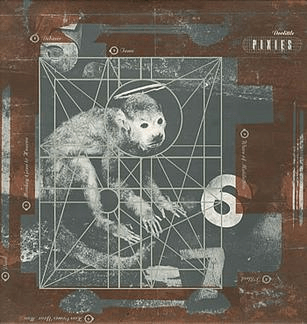
My first memory of The Pixies – technically just “Pixies,” but that sounds weird – is talking to my friend Cameron at work one day in about 1988 or so and he was telling me about his band, The Stickmen – or maybe it was just “Stickmen,” – and he would say kind of sheepishly, “We’re like The Pixies.” Like I was supposed to know what that meant. I heard him tell several people that, and I can still mimic the sentence today. You kind of shrug and put a half smile on your face and say, almost apologetically, “We’re like The Pixies.”
I don’t know what became of Stickmen. I kind of see Cameron on Facebook and Twitter from time to time, and we traded voice mails recently, but we haven’t truly connected in decades. He was a good friend, and one that I still miss. He was a year or two older than me, and that can be a lot when you’re 18 and your buddy is 20. He taught me a lot about music, he was cool to hang out with and to play poker with. He lent me car sometimes, which was slightly less shitty than mine, and I always hoped he wouldn’t threaten me with his pet tarantula. He didn’t.
Since Cameron was cool, I knew The Pixies must also be cool. But they were never really played on the radio that I heard, although some website claims that the Surfer Rosa gem “Bone Machine” was KROQ’s 98th “top song” in 1988. I don’t know what that means: they played the song three times that year, but played “Peek A Boo” by Souixsie and the Banshees eight million times? Anyway, I didn’t have any Pixies CD’s until I collected enough stickers from blank Maxell cassettes to send away for the CD of my choice. That’s right, just write in which CD you wanted them to send you, and they would send it, or so they said. It was 1989 and I had just moved from L.A. to Sacramento, and recording CD’s to cassette for automotive listening was a great way to kill time. It would be well over a decade before I got my first car CD player, so taping CD’s was a must!
A few weeks later, Pixies – Doolittle appeared in the mail where I was living at my dad’s house. I’m sure I chose it because it was their most recent album. To this day, it’s regarded as their best of the five in the Kim Deal era, although you could make a strong case for Bossanova, as my son Henry does. I plugged that Doolittle CD into the Pioneer component stereo system I had in my bedroom at my dad’s, a system appropriated from the living room since “he never listened to it anyway.” I was blown away.
The artwork was trippy and surrealistic. The lyrics were even more trippy and surrealistic. I can’t really tell you what Pixies songs are about. Some are about spaceships, some are about going to the beach, some are maybe about heroin. I really don’t know. Weirdly, I don’t much care. For a bunch of songs that I can’t really explain *why* they mean so much to me, you have to trust me that they do. A sampling:
Slicing up eyeballs, I want you to know
Girlie so groovy, I want you to know
(“Slicing Up Eyeballs” became the name of an extremely influential website that discusses music and produces playlists of all kinds of great “alternative” 80’s stuff like Pixies – obvi – Smiths, The Cure, Depeche Mode, R.E.M., Love and Rockets, et al)
Hips like Cindarella
(Cindy was hippy? Who knew?)
I’ve kissed mermaids, rode the El Niño
Walked the sand with the crustaceans
(Who hasn’t?)
Prithee, my dear, why are we here?
Nobody knows, we go to sleep
(Truer words were never sung.)
Big shake on the boxcar moving
Big shake to the land that’s falling down
(Watch out!)
You crazy babe, Batsheba, I want ya
(Relatable.)
You get the point. Those are lyrics from songs on the first half of the record. I don’t know what any of them mean. I don’t know what Black Francis was trying to say. I can’t explain why this album is so bad-fucking-ass. It just is. There were others making heavy, “alternative” rock during this time. Much of it I’ve written about in these posts. Bands like Sonic Youth, Nirvana, Love and Rockets, The Smiths, Jane’s Addiction, and The Jesus and Mary Chain, have gotten love on this site. Others like Dinosaur Jr., Pavement, Pearl Jam, and Husker Du not as much. It’s just a matter of what hits you at what time, and what misses. Mike Trout can miss a fastball like I miss on Husker Du, but it doesn’t mean he’s not a great hitter. Like Pixies lyrics, I don’t really know what that analogy means, but it also doesn’t mean it’s not awesome. Like Mike Trout. Who is awesome. Even if he’s on the Angels.
Maybe I’ve gone on this long because I simply don’t know what to write about The Pixies’ music, or this album. I honestly don’t know why it hits me – then, and now, 30+ years later – as hard as it does. Why it’s my legit third favorite album of all time. I’m listening to it now as I write this, and it just is. It’s THAT good.
We can try to figure it out. Black Francis, who has gone by Frank Black professionally in later years, born one Charles Thompson IV, is an incredible singer and unlikely alt-rock hero: he of the pudgy middle, high voice, and balding (then, and completely bald now) pate. Francis belted out lyrics in Spanish and English alternately, with equal frenzy. Pixies had a loud/quiet/loud ethic, where traditionally bands did it the opposite way, having quiet verses followed by loud choruses back to more quite verses. Don’t worry, I didn’t figure that out by myself. It was the name of a 2006 documentary about the band. I said to myself, “Oh, yeah, totally…”
Sorry, I have to interrupt my essay here because the final song on Doolittle has come into my AirPods, “Gouge Away,” and it’s a motherfucking BANGER.
Sleeping on your belly
You break my arms
You spoon my eyes
Been rubbing a bad charm with holy fingers
Gouge away
Stay all day
If you want to
I think it’s about drugs. Kim Deal‘s “La la la la” in the background makes every song better. OK, it’s over now. This record is like having your mom cook your favorite meal when you go home for the holidays. It’s heaven.
Kim Deal was and is a force of nature. Her bass notes start the album, and she does backing vocals on most of the songs. In the minds of a lot of fans, there is no Pixies without Kim Deal. She went on to found and continues to play in The Breeders, who had hits with “Cannonball” and made some great records, notably Pod (see The Leftovers), Last Splash, and All Nerve. I would argue that The Breeders has been the most successful of all the post-original Pixies projects, including new Pixies material, much of which has been quite good. The Pixies were always at their best when you could really hear Kim’s contributions to the band, which is why the final of their first five records, Trompe Le Monde, is my least favorite of that group. Trompe is still a badass record though. The worst original Pixies album is probably also in the top 500 greatest albums, according to better writers than me.
David Lovering and Joey Santiago hold it down on drums and lead guitar, respectively. Joey is a trip live, and does some very eclectic and interesting things with his instrument. Lovering is just a psycho back there on the skins. Underrated and overachieving as he slams his way through song after song, all the while looking like your uncle, the retired rhetoric professor from your state university. The Pixies would not be the band they were without these two, although Francis and Deal get most of the credit.
I’ve seen The Pixies live precisely four times in varying circumstances. The first time was when they opened for U2 at Arco Arena in Sacramento on the latter’s Achtung Baby tour. At that time, I didn’t really have their music tattooed on my soul, so I didn’t recognize all the songs. The seats weren’t great, as can happen at big arena shows, and although I loved U2’s show – I knew that album by heart; see No. 9 above – The Pixies set didn’t leave me especially awestruck, although I enjoyed their performance, especially the songs I recognized like “Here Comes Your Man,” “Monkey Gone to Heaven,” and their cover of “Head On” by The Jesus and Mary Chain.
Eleven years later, in 2003, my buddy Dylan orchestrated a trek to The Greek Theater in Berkeley to see them on a revival tour. They hadn’t released any new material as The Pixies, although the individual band members had been busy with side projects like Francis’s Frank Black projects, and Deal’s Breeders, both great acts – with a heavy nod to The Breeders, as I mentioned earlier. By 2003, I had long become truly obsessed with The Pixies, and knew every song they played by the first note. We arrived a tad late and didn’t have great seats to this either, but a couple of us wormed our way down closer onto the floor over the course of the night. These days if it’s a band I really want to see, I have a PLAN to get front and center to general admission shows; usually it works. It involves arriving *really* early, and having a posse to hold down the spot while others need to make restroom and beer runs.
This was a period in my life when I wasn’t going to many concerts, so the trip to Berkeley was a real treat. I bought a T-shirt, and inexplicably lost it a couple of years later. How does a grown man, married at that time, mainly sleeping in his own bed each night unless on vacation, lose his favorite T-shirt? It bothers me to this day. A future piece will involve the loss of many more prized concert T-shirts. Stay tuned.
2003 was a great gig, but they returned in 2016 with new bassist Paz Lenchantin supporting their first album with Paz, Head Carrier. To this day I tell anyone who will listen that Head Carrier is a GREAT Pixies album, to be considered alongside those first five classics with Kim Deal. The best thing about the 2016 gig was that it was at Ace of Spades, one of my favorite Sacramento venues, holding about 900-1000 people in a nightclub atmosphere. I didn’t plan well enough, but my son Henry and I met up with some friends to see the gig. Henry and I split up into different friend groups when we arrived, and I’m not sure I saw him until after the show. I wasn’t front and center, but the floor was crazy, with the whole crowd losing their minds for the old songs, and appreciating the new.
Finally, the fourth time I saw them was at Shoreline Amphitheater opening for Weezer just a few years ago. Again, not great seats, and although I knew and appreciated all the songs, it wasn’t a stellar experience. Maybe they’ll come back to Ace of Spaces someday. Nah.
In summary, it’s hard to explain my obsession with Pixies. Their lyrics are weird and lovely but don’t really move me. The bass thumps, the drums rip, Joey on lead guitar shreds, and Black Francis has a cool indie voice. But why is this record, for me, above The Beatles, Black Sabbath, U2, Wilco, Nirvana, Red Hot Chili Peppers, Liz Phair, or Neil Young? I can’t say. It just is. I’ll put this album on any hour of any day in any mood, and it just fucking rocks harder than almost anything else. That’s all I can say.
2. Led Zeppelin – II
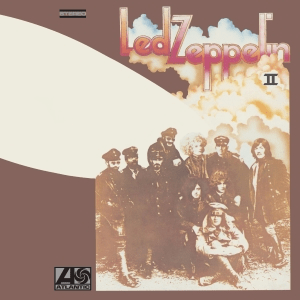
I don’t have much new to write about my favorite band of all time, Led Zeppelin, that I didn’t write in this piece from 2017. Their music is magic to me, pure and simple. And it’s not just nostalgia. True, I am INSTANTLY transported to my best friend Tony‘s bedroom in 1983 when the opening Jimmy Page riff of “Whole Lotta Love,” the track that opens this album, comes on. My other best friend Chad is there too, and we’re air guitaring and singing while Tony – a talented drummer, still – is banging on his little drum kit in the small house on Bakman Street in North Hollywood where he lived then. Forty years later, I am thirteen again, and Led Zeppelin II is pretty much best thing that has ever happened in the world.
Within 30 seconds of “Whole Lotta Love,” you hear the mastery of the musicians making this record. It starts with Page’s iconic riff; it sounds like someone singing: “a WHOle lotta LOVE, love, love, love… love, love, love…” Then John Paul Jones‘ bass comes in on the second measure, exactly mimicking Page’s riff: A deeper thumping you can feel in your chest: “a WHOle lotta LOVE, love, love, love… love, love, love, a WHOle lotta LOVE…” And here comes Robert Plant, his voice the alto to Jimmy’s middle and Jonesy’s low end: “You need coolin’, and baby I’m not foolin’…” he croons in the opening verse, while Page and Jones keep the steady rhythm behind him. But about 30 seconds in, John Bonham‘s savage drum intro absolutely slaughters, announcing itself like a war cry, letting you know that the first three virtuosos are not a three-piece: the true backbone of the greatest rock and roll band of all time is in the house, kicking ass and fucking shit UP!
No one played drums like John Bonham. Not before him, not after him. I’m not a drummer; I don’t have the vocabulary nor the imagination to describe how he played to non-Zeppelin fans. Keith Moon was a beast, Neil Peart was a maestro, Dave Grohl is a maniac, Glenn Kotche is an artist, and Lars Ulrich is a demon. But John Bonham? Well, John Bonham was God. He was actually God himself, behind a drum kit. He just hit the skins *harder* than anyone else, but never overpowered the band he was supporting. This is an incredibly fine line to walk. Most rock bands don’t want drums to fade into the background, merely a supporting rhythm – yacht-rock style – but you also don’t want them to take center stage and drown everyone else out. Bonzo danced on that tightrope perfectly: he shone when it was his time to shine – as he does a LOT on this record – and he knows when to fall back in line on equal – never lesser – footing with his band mates. Respect to Zeppelin for breaking up after he died of alcoholism in 1980 at the age of 32, but it saddens me to think what incredible music they might have continued to make in the years that followed. Plant has done some interesting things since then, but Page and Jones, well, we haven’t heard from them too much since then in the way of real contributions to popular music, I’m sad to admit.
Although I wouldn’t have wished him gone, maybe Bonzo’s death put Led Zeppelin’s eight studio albums in rarefied air, never to be touched, never to be bothered, never to be outshone, nor wistfully remarked upon as “Remember when they were really good?” No comment, Mick and Keith. The Who, The Stones, The Kinks, Paul McCartney and Elton John, so many British musicians of the time trudged along for decades after their 60’s and 70’s heydays, sometimes making really good stuff, but no one would argue any of those artists did their best work post-1980. Led Zeppelin called it quits when their beloved drummer died, and somehow, this puts them in a special, magical, inner circle of greatness. I don’t begrudge any musicians the careers they have, or choose not to have, but this was a heavy move by Zeppelin. Respect.
Before “Whole Lotta Love” hits the 90 second mark, it morphs into a kind of a psychedelic mind trip, with the stereo bouncing from left to right back to left again, mainly focusing on Bonham’s jazzy backbeat, Plant’s moanings and groanings, and everything else is some kind of sound effects. This was still the 1960’s, mind you. This kind of interlude was not unexpected for rock bands of the time, but it was uncommon for Zeppelin. After about another minute and a half of this acid trip, Bonham’s drums machine-gun out of the mist, taking us back to the proper song, Page hits some sick leads on his guitar, Jones jumps back in to set the bottom end, and Plant dives right back into verses very similar to those first ones. But we’re not done yet. After another minute or so, Plant goes acapella, accompanied only by his own echo: “Way down inside. Woman, you need… loooooooooovvvvvvveeeeeee…..” and Bonham is there again, somehow louder and more ferocious than ever. Page and Jones come back in with lead guitar and bass, and somehow a five and a half minute song seems like it’s over too soon. It’s a masterpiece. One of the greatest rock and roll songs of all time.
True, “Whole Lotta Love” was cadged from a Small Faces version of a Muddy Waters song, penned by the great Willie Dixon (Zeppelin later paid the price for not applying proper credit). The songs are similar, but also very different. Zeppelin themselves did not eventually deny the semi-plagiarism, settling out of court with Dixon. The band has a long history of taking pieces of other artists’ songs and weaving a Zeppified cloak around them and crediting only Page and Plant as songwriters. That’s fucked up. The band should have given all credit due and gotten the correct permissions to incorporate pieces of others’ music. So, yeah, I get it. They suck. But also, they rule. Now, back to my second-favorite album of all time.
Suddenly, one of the greatest rock songs of all time gives way to a soft, lovely, jazzy little number called “What Is and What Should Never Be,” at least for the first 30 seconds of the song. A half a minute in, Bonham crashes his toms and his kick drum like a man possessed and Plant rolls into the screaming chorus “Catch the wind, see us spin, sail away, leave today, way up high in the sky,” while Page is grinding the lead guitar and Jonesy is pounding the bass. But almost as soon as the hard rock begins, it settles right back into the light jazzy number with Plant’s soft, sweet vocals. It’s a truly interesting track, with instrumental sections you’d be safe to play at your local elder care center, but it’s never more than about 25 seconds later that the song builds into a screaming staccato of intensity, then calming down again. But it doesn’t feel schizophrenic. It feels perfect. Finally, at three and a half minutes in, the song settles on a middle ground of rocking, and Plant sings us home with “Everybody I know seems to know me well, but they’re never gonna know that I move like hell.” In lesser hands it could seem like throwaway on a great record, but it’s actually almost five minutes long. Over ten minutes into Led Zeppelin II, we’ve taken trips around the world and back again, and we’re only two tracks in.
I wouldn’t ordinarily bore you opining track-by-track through the whole record, but we are at my second favorite album of all time, and dammit, I want you to know why I feel this way! The heavy blues rock continues on track three, “The Lemon Song,” with another of Page’s gnarly riffs kicking us off into a semi-jazzy, funky little rhythm with some truly incredible bass work by John Paul Jones. Plant wails about how he should have left his woman a long time ago, and in true Zeppelin II fashion, about 90 seconds in the song just starts fucking shredding. Page is on fire with licks that sing every bit as resoundingly as Plant’s voice does. Jimmy Page’s lead guitar has always been the second singer in Led Zeppelin, and he proves it here on Zeppelin II more, I think, than on any other of their records. Jonesy’s bass is truly frenetic in this section, sharing the stage with Page rather than just providing the backbone to the song. Bonzo is hammering the skins in his inimitable way, every bit an equal to his fellow virtuoso musicians. Zeppelin was so interesting this way; bass and drums were never behind the scenes simply supporting the song as a foundation. They were never ostentatious either, but they were front and center, *sharing* the stage equally with the more traditionally attention-grabbing singer and lead guitar player.
Eventually Plant lets us know that he wants his woman to squeeze him “til the juice runs down his leg.” I think it’s an ejaculation metaphor. Not sure, lol. Seriously though, this song is essentially a cover of Howlin’ Wolf‘s “Killing Floor,” and the lemon metaphor is steeped in older blues lore. Yes, Led Zeppelin often ripped off older, Black American blues musicians. That’s an essay for another day. They seemed to pay up when they got sued (I know, it never should have come to that), but as a young white fan in the 1980’s, I didn’t know any of that old blues stuff, although Zeppelin’s music led me to some of it later. It’s not a justification, but it’s the reality of the album that hit me the hardest in my life, up to that point anyway.
After “The Lemon Song” we take a turn stylistically to the love song, “Thank You.” I adore this song. It was my eighth-grade girlfriend’s and my song. And if you’re anywhere close to my age it’s a coin flip whether it was your and your girl/boyfriends’ song too. Zeppelin slows down here and gets a little folky. Well, as folky as you can be with John Bonham behind the drum kit. But his bombastic style, while still evident on this track, is muted in perfect timing with the organ and acoustic guitars that make up most of the song. You get a hint of Bonzo’s blast at about the two minute mark, but he knows how to keep it appropriate to the song. Plant’s vocals are delicate; it’s a perfect love song. The music builds slowly from silence, and at the end fades out just as slowly, with a sneaky return only to end with a crescendo. Who hasn’t had a number of relationships like that?
If the sun refuse to shine
I would still be loving you
When mountains crumble to the sea
There will still be you and me
To be an eighth-grader and believe in love like that, well, it’s a perfect thing. But then you break up, and she messes around with your best friend a little, then you get back together, then you break up again, and forty years later you and your best friend are still tight, despite the passage of decades and miles, and the girl had a stroke about 15 years ago, but gets by – I guess – and we’re all still friends. I’ve never been able to listen to “Thank You” and not think about her, and all I thought was in front of me in my life back then. I’m not disappointed, just sentimental.
“Thank You” ends side one, and then you flip the album to side two to what might possibly be my favorite Led Zeppelin song – maybe my favorite hard rock song – of all time: “Heartbreaker.” I love this song so much, it’s hard to believe it was recorded in 1969, the year I was born, and what is seeming like longer and longer ago every year that passes. I guess that’s how time works, huh? Still, it feels like 1869… some distant year in the past that no one remembers. Well, I remember, goddammit!!! But I digress, “Heartbreaker” is maybe the first true heavy metal song. You can make an argument for songs from Black Sabbath‘s first album, released a scant few months later, but I wouldn’t.
I became fascinated recently by songs released between the late 1960’s and 1980 that might be considered the roots of heavy metal. I didn’t really do research on this, I just made a playlist of a bunch of songs I already knew and loved, and put them in roughly chronological order. I’ve been listening to this playlist on repeat quite a bit lately, and the first song I thought of was “Heartbreaker” by Zeppelin. Certainly there were hard-rocking songs on their first album, released earlier in that same year – songs like “Communication Breakdown,” and maybe to an extent, “Good Times Bad Times,” – but Zeppelin II is where they metal out a little bit more, while completely retaining their bluesy influences.
“Heartbreaker” is the perfect hard rock / heavy metal song, starting of course with Jimmy Page’s cracking riff: nah, nah, nah, nah NAH nah / nah nah nah nah nah, nah, nah NAH nah, Bonzo comes blasting away, Jonesy whittling away on his bass, and then here comes Plant: “Hey fellas have you heard the news? You know Annie’s back in town.” The perfect trope for every dick-swinging, open-shirt-wearing, bulge-showcasing rock musician of that (and maybe every) era: “Hey guys, you know that ho? She back!” Zeppelin wouldn’t have won Ms. Magazine‘s Feminists of the Year award when that magazine debuted a couple of years later, but they did win the Chip Powell Best Heavy Metal Song Ever, Yes It Is Heavy Metal, Award, starting in 1983 or so, and then pretty much every year after that.
There’s about a fifty-second Jimmy Page guitar solo that comes around two minutes in. All other instruments are silent, it’s just Page wailing, shredding, singing with his Gibson Les Paul in a way that no other guitar solo did before or since. I think I looked up to Jimmy Page and the rest of Led Zeppelin the way other kids looked up to astronauts or maybe sports heroes. They were god-like creatures possessing a level of talent seemingly out of reach for mere mortals.
In my mind there is only a quarter-second gap between “Heartbreaker” and “Living Loving Maid (She’s Just a Woman),” but as I play my Zeppelin II vinyl record now, it’s a full several seconds. It’s difficult for me to listen to one song without the other. Another iconic Jimmy Page riff, but this song starts with Plant screaming the first lyric of the song right from the jump; his is the first instrument you hear on this one. Bonzo stampedes his way through, and it’s a fun romp clocking in at just over two and a half minutes – the type of song that Zeppelin increasingly seemed to move away from in its meatier records like IV, Houses of the Holy, and Physical Graffiti.
“Living Loving Maid” gives way to another of my all time Zeppelin songs: “Ramble On,” and this is a decidedly uncontroversial opinion. Everyone seems to love “Ramble On.” It’s the perfect blend of folky and rocky, something Zeppelin excelled at, especially on this record; nowhere is this alloy more present than in “Ramble On.” It starts so serenely and beautifully with Page strumming an acoustic guitar, Bonham tapping out the rhythm with his hands, Jones providing a muted but exciting bass line as Plant sings sweetly at first “The leaves are falling all around, time I was on my way…” When he gets to the chorus he kicks it up a couple of notches, the bass becomes frenetic, and Bonzo busts out his sticks and starts mashing like only he knows how to do. It’s an interesting song where Page really does take the background: no flashy solos, no grinding riffs. He truly takes a back seat to Plant, Bonham, and Jones in a way that he almost never does. Page doesn’t always need to be at the front of the band, but he seldom blends in for long. Don’t misunderstand, his guitar is there, but it’s more providing rhythm than taking the lead as it normally does. The song plays around with the left/right stereo again – as lots of songs during this time did – to provide a trippy experience to its headphoned, stoned listeners.
Lyrically, the song is bananas; it’s all over the place. The teller of the story endlessly lets us know he needs to ramble on so he can find his baby, but every time he thinks about his baby he thinks “We gots to part.” He has no time to spread roots, and before long Gollum – yes, THAT Gollum, and the Evil One in Mordor stole his baby. It’s like he heard about The Lord of the Rings and had a dream about it, but couldn’t keep the details straight. It doesn’t matter, it’s a beautiful tune, a real sing along, and a perfect fit right in the middle of side two of this, my second favorite album of all time.
“Ramble On” precedes “Moby Dick” – not sure why it’s called that – that showcases Bonham’s drum prowess, but is a true banger of a rock song on its own, despite the lack of vocals. I guess Robert Plant needs a break every now and then. It’s a drum solo that is never boring, and that’s saying something.
Finally, the album concludes with “Bring it on Home,” which begins and ends with some quiet, bluesy harmonica. Plant brings his voice down a couple of octaves between blows on his instrument, but the song really rocks in the middle. It’s the perfect ending to the perfect rock album.
I haven’t done much research while writing about these albums. Occasionally I look at the track listing to refresh my memory about the order of the songs, as that order often informed how I felt about the album as a whole. But in casually perusing Wikipedia looking up various Led Zeppelin facts here, I was stunned to see how *many* songs they flat out or partially stole from American blues musicians, many/most of them Black artists who weren’t paid a penny from the band until they were sued, their songwriting credits typically only appearing on later releases of the record after the lawsuits. The list is incredible. I don’t feel good about this. I don’t like it. I won’t defend it. But like my love for Michael Jackson‘s music, Louis C.K.‘s comedy, and much of Kevin Spacey‘s TV and film work, I choose to separate the art from the artist. I’m not sure anything is going to change the way I feel about this album, or Led Zeppelin as a whole. I’m glad that many original songwriters eventually got their due. Zeppelin was obviously enamored – as were many British rock musicians in the 1960’s – of American blues music, and I suppose one can see how it would worm its way into the hard rock riffs that the band did truly originate. But Black artists put up with a lot of shit back in the day, creating the music that became rock and roll, all the while the subject of vicious racism in the United States at that time for traveling musicians. And to watch your music fill arenas and radio airwaves when sung by white artists a couple of decades later? It must have been absolutely galling. Still, this record never gets old. It doesn’t hit the social justice section of my brain, but it does hit the beating of my heart. I think Bonham’s drums are my actual heartbeat sometimes, that’s how deeply embedded into my DNA Led Zeppelin and this record in particular are. I’m glad they broke up after Bonham died. They left an incredible – if imperfect – legacy behind.
You’ve made it this far… click here for my number one!
One response to “The Fifty: Part V – 2 to 10”
-

[…] Click here for Part I: The ProjectAnd here for Part V: 2 to 10 […]
LikeLike

 police horse home...
Leave a comment